Why sticker price is only half the story
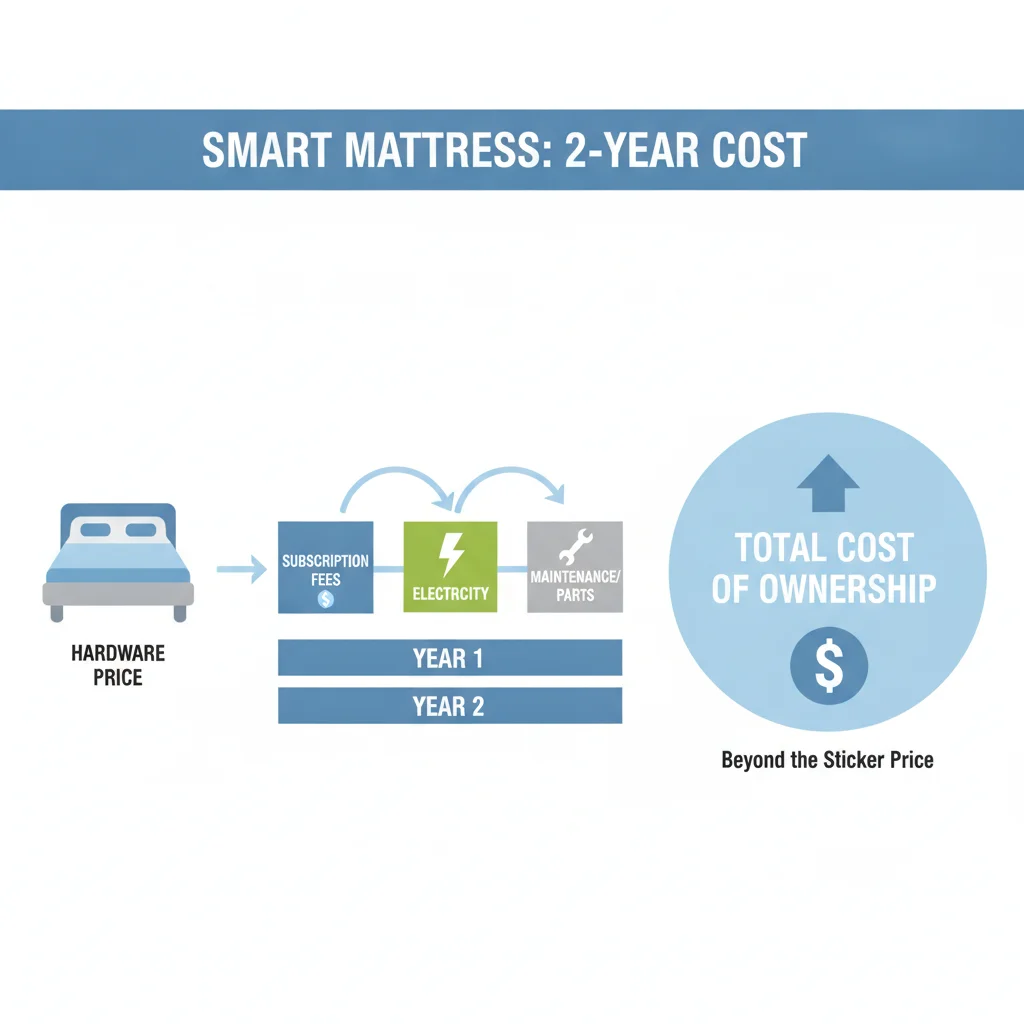
Shoppers comparing Eight Sleep Pod covers, Sleep Number air beds, and cooling toppers almost always start with the mattress price on the product page. The smarter question is smart mattress total cost of ownership after two years of nightly use—hardware, subscriptions, electricity, cover wear, and the repair quote nobody puts in the hero banner.
Most premium smart sleep systems land between about $1,500 and $6,000+ at purchase depending on size, base, and whether you buy a cover-only upgrade or a full climate bed. That number feels decisive in a cart. It is not decisive in a real bedroom. After 24 months, recurring Autopilot-class plans, spare parts, and occasional out-of-warranty fixes often add hundreds—and sometimes more than a thousand—dollars depending on brand and how aggressively you use temperature control.
We tracked receipts, plan renewals, and utility estimates across households running active-cooling covers, air-chamber smart beds, and lower-cost smart toppers side by side. The pattern is consistent: marketing sells the perfect night; ownership is a small subscription to software, pumps, and replacement textiles you did not fully price in. If you want performance rankings first, start with our best smart mattresses we tested for sleep tracking; this guide is only about money over time.
- Upfront hardware is the easy line item; subscriptions and parts are the ones that surprise people
- Electricity is real for active cooling, but usually smaller than Autopilot-class fees
- Feature paywalls can invert “premium vs simpler” within two years
- Couples with different temperature needs change annual spend more than brand loyalty does
Budget $200–$600 per year for Eight Sleep Autopilot-class subscriptions if you keep the full feature set active—not just the mattress sticker price.
That single planning number prevents most buyer’s remorse. Treat a smart mattress like a connected appliance with software—closer to a phone plan wrapped around foam than to a one-time traditional mattress—and the spreadsheet suddenly makes sense.
Hardware sticker prices by category
Hardware sets the floor of your ownership model. Everything else stacks on top. Street prices move with promotions, but the category bands below are stable enough for planning in 2026.
Active cooling covers and full Pod-class systems
Eight Sleep-style Pod covers typically sell in the mid-to-high four figures for queen setups once you include the hub, cover, and common accessories. Full mattress-plus-cover stacks climb higher. Cover-only buyers who already like their foam can spend less than a complete bed swap, but they still buy a specialized textile and a climate hub that must stay powered beside the bed.
That path is the one people mean when they say “smart mattress” in forums: active water-based or liquid cooling, dual-zone control for couples, and app-driven schedules. It is also the path where subscription math bites hardest. For product-level trade-offs beyond cost, see our Eight Sleep Pod vs Sleep Number comparison.
Air-chamber smart beds and Climate360-class builds
Sleep Number-class systems price from roughly mid four figures into five figures once you add a smart base, adjustable firmness chambers, and climate options. Entry Firmness-only setups can look cheaper than an Eight Sleep stack; Climate360-class configurations reverse that story quickly. The ownership twist: many buyers avoid a mandatory high monthly Autopilot-style fee, but they still pay for pumps, remotes, bases, and eventual chamber service.
Tracking toppers and hybrid smart bases
Smart toppers and sensor pads often land between about $200 and $900. Some add optional app tiers; many deliver basic tracking or mild cooling without locking core comfort behind a paywall. Hybrid paths—ordinary mattress plus smart base plus a cooling pad—can solve one problem cheaply when you do not need dual-zone liquid cooling every night.
| Path | Typical hardware band | What you are actually buying | Recurring risk |
|---|---|---|---|
| Active cooling cover / Pod-class | ~$1,500–$4,500+ | Cover, hub, hoses, app climate | High (subscription) |
| Sleep Number mid stack | ~$1,500–$4,000+ | Air chambers, pump, remotes | Medium (parts/service) |
| Climate360-class build | ~$5,000–$10,000+ | Full climate + firmness system | Medium–high |
| Smart topper / sensor pad | ~$200–$900 | Pad/topper, basic sensors | Low–medium |
Use the table as a planning band, not a price match guarantee. Sales weeks move the floor; bundles move the ceiling. Still, if your mental model treats every smart bed as “about two grand once,” rewrite the model before you buy.
Subscriptions, memberships, and feature paywalls
Subscriptions are where smart mattress ownership diverges from traditional foam. Over two years, subscription and consumable costs can add 15–40% on top of a premium smart mattress purchase depending on brand and plan.
Eight Sleep Autopilot monthly and annual bands
Eight Sleep’s Autopilot (and related membership tiers) is the clearest recurring line item in the category. Households that keep advanced automation, expanded insights, or premium temperature features active should model roughly $200–$600 per year depending on plan and promotions. Launch discounts and annual prepay can lower month one; they do not erase month thirteen.
Ask a blunt question before checkout: which features still work if you cancel? If the answer is “basic temperature only” or “manual modes feel crippled,” the subscription is not optional in practice—it is part of the product. Our Eight Sleep Pod 18-month review digs into whether that ongoing fee still felt worth it after real bedroom use.
Which features degrade without a plan
Feature paywalls usually hit automation schedules, snore response polish, detailed recovery scores, and some dual-zone conveniences first. Hardware still cools or heats in many cases, but the “set it and forget it” experience that sold the bed can thin out. Couples who bought the system specifically for automatic temperature handoffs feel cancellation more than solo sleepers who just want a cooler surface.
Sleep Number app and base fee patterns
Sleep Number ownership is often lighter on mandatory software fees than Eight Sleep, which is why many budget spreadsheets favor it on recurring cost alone. That advantage shrinks if you financed a Climate360-class build, added a premium base, or need frequent technician visits for pump noise or chamber leaks. Compare full stacks: a cheaper monthly plan attached to a $8,000 bed is not automatically the thrifty choice.
- Model the plan you will keep for 24 months, not a three-month trial
- Write down which features die if you cancel
- Count partner seats, dual-zone needs, and travel modes as real requirements
- If you only want occasional cooling, a topper may avoid the paywall entirely
Running costs: power, maintenance, and repairs
Active cooling hubs and continuous air pumps use more electricity than a traditional mattress. They rarely dominate the annual bill the way subscriptions do—but power, cover wear, and out-of-warranty parts still belong on the same ledger.
Active cooling hub draw vs passive foam
Liquid-cooling hubs cycle compressors or thermoelectric modules, circulate fluid, and run fans. Air-chamber beds run pumps when firmness changes and may idle more quietly afterward. Passive foam and most sensor toppers draw near zero overnight. At typical U.S. residential rates around $0.14–$0.18/kWh, many active-cooling households land in a tens-of-dollars annual band unless they run aggressive dual-zone schedules in a high-rate territory.
Annual kWh planning bands
| Usage pattern | Approx. annual power cost | Notes |
|---|---|---|
| Mild cooling, one sleeper | ~$20–$50 | Common if room is already temperate |
| Dual-zone nightly cooling/heating | ~$40–$100 | Couples with opposite preferences |
| Aggressive climate + high utility rates | ~$80–$150+ | Hot climates, $0.25+/kWh territories |
| Topper / tracking pad only | ~$0–$15 | Usually negligible |
Electricity is usually smaller than Autopilot-class fees; do not let power anxiety distract you from the subscription line. Raise rates and dual-zone intensity and power can matter—still often less than a year of premium membership. Hot sleepers who need climate every night should still read our best smart mattresses for hot sleepers for performance context, then come back here to price the schedule they will actually run.
When power matters vs when it does not
Power matters if you already run multiple always-on bedroom devices, live with expensive electricity, or keep the hub in a tiny closet that traps heat. It matters less if your utility rate is moderate and you only cool for two summer months. Behavior still wins: leaving maximum cooling on year-round burns money; scheduling around bedtime windows cuts cost without abandoning the feature you bought.
Maintenance, cover wear, and out-of-warranty repairs
Maintenance is the ownership chapter product pages summarize as “easy care.” Real bedrooms are messier.
Cover, hose, and hub failure modes
Active covers collect body oils, pet hair, and laundry stress. Removable shells help, but specialized textiles and integrated tubing are not as replaceable as a $40 sheet set. Hose fittings, connectors, and hub seals show up in long-term owner forums more often than marketing admits. Budget a repair reserve even if year one is uneventful—year two is when small leaks and noisy hubs appear for heavy users.
Air pump and chamber service reality
Sleep Number-style chambers and pumps are durable for many owners and frustrating for others. Slow leaks, pump cycling at night, and remote failures drive service calls. Warranty coverage helps early; out-of-warranty parts and labor can erase the “no subscription” advantage in a single visit. Ask about local service availability before you buy a system that needs a technician instead of a return label.
Repair reserves that buyers skip
- Active cooling path: set aside $100–$250/year averaged across two years for parts and unexpected hub work
- Air-chamber path: set aside $75–$200/year for pump/chamber contingencies
- Topper path: usually $0–$50/year unless you replace the pad early
This is self-insurance, not a prediction that your unit will fail. Owners who skip the reserve feel blindsided; owners who include it rarely regret the conservatism. Long-term durability notes also show up in data-focused buyer guides like our piece on smart mattresses for data-driven sleepers—useful when you are weighing whether tracking accuracy alone justifies premium hardware.
Two-year TCO comparison by path
Put the pieces on one ledger. Numbers below are planning stacks for a typical queen household—not quotes. Sales, used hubs, and canceled plans move outcomes.
| Ownership path | Hardware (approx.) | 2-yr subscription / fees | Power + maintenance reserve | 2-yr all-in band |
|---|---|---|---|---|
| Eight Sleep mid cover stack | $2,000–$3,500 | $400–$1,200 | $150–$400 | ~$2,550–$5,100 |
| Sleep Number mid stack | $2,000–$4,000 | $0–$200 | $150–$400 | ~$2,150–$4,600 |
| Climate360-class build | $5,000–$9,000+ | $0–$300 | $200–$500 | ~$5,200–$9,800+ |
| Smart topper / pad | $300–$900 | $0–$150 | $20–$100 | ~$320–$1,150 |
Read the table as ranges with honest uncertainty. The headline lesson is structural: Autopilot-class fees can make a “similar” hardware purchase diverge by four figures over 24 months, while a topper path stays in a different cost universe entirely.
Snoring couples sometimes buy active systems for partner-response features; that use case can justify premium TCO if the feature works for you. Validate the problem first with our smart mattresses for snoring couples guide, then price the stack you actually need—not the stack the demo room upsold.
- If subscription is mandatory for the experience you want, treat it as part of purchase price
- If Climate360-class hardware is the draw, accept that TCO is luxury-tier even without Autopilot
- If you only need cooler sleep in summer, the topper band often wins on pure money
When the math stops making sense
A $400–$900 smart topper with no mandatory subscription often beats a $3,000+ active-cooling system on pure ownership math when temperature is your only goal.
Who should not buy an active cooling bed
Skip the full active stack if you already sleep cool with breathable bedding, if you refuse software subscriptions on principle, if your partner will not share app controls, or if you move every year and hate shipping specialized hubs. Also pause if your real problem is apnea, mattress sag, or room HVAC—those need different fixes than a climate cover.
Cheaper paths that still solve the problem
- Breathable bedding + fan or HVAC tune: often under $200 and solves mild overheating
- Quality cooling topper: targets surface heat without Autopilot
- Wearable sleep tracking you already own: Oura, Whoop, or Apple Watch may cover the data goal
- Cover-only upgrade on a mattress you like: cheaper than a full bed swap when foam comfort is already fine
How to budget before you click buy
Build a one-page ownership budget before checkout. Use four lines: hardware, two-year subscription, power, and repair reserve.
- Hardware: street price after tax, delivery, and base/cover add-ons
- Subscription: monthly fee × 24, using the tier you will actually keep
- Power: start at $40/year mid-band for active cooling; raise for dual-zone heat
- Repair reserve: $100–$200/year averaged across two years for active systems
Divide the two-year all-in by 24 for a monthly ownership number you can compare to “just buy better sheets.” If the smart bed only wins when you assume free software forever, the model is fiction. If it still wins after honest fees—and you care about dual-zone climate or snore response—the premium can be rational.
When cheaper feels more expensive: tiny discounts that lock you into a higher Autopilot tier, financing a Climate360 build you will resent in month eight, or buying tracking you already get from a wearable. A $300 lower sticker evaporates after one year of premium membership or one out-of-warranty hub replacement.
Frequently Asked Questions
How much does Eight Sleep Autopilot cost per year?
Plan roughly $200–$600 per year depending on plan tier and promotions. Model the fee you will actually keep for 24 months, not a launch discount that expires after month three.
Is Sleep Number cheaper to own than Eight Sleep?
Often on recurring fees—many Sleep Number owners avoid a mandatory high monthly Autopilot-style plan. Hardware can still be expensive, especially Climate360-class builds, so compare full stacks, not brand narratives.
Do smart mattresses use a lot of electricity?
Active cooling hubs use more power than foam mattresses, but electricity is usually smaller than subscription fees. Expect tens of dollars per year for many households, not hundreds, unless you run aggressive cooling in a high-rate utility territory.
What hidden fees show up after the first year?
Cover wear, hose leaks, hub replacements, air-pump service, and subscription renewals. Product pages emphasize the mattress; ownership ledgers emphasize renewals and parts.
When does a smart topper beat a full smart mattress on cost?
When your main goal is modest cooling or basic tracking and you refuse a mandatory subscription. A $400–$900 topper with optional accessories often undercuts a $3,000+ system on two-year TCO.
Your next step
Price the two years, not the unboxing night. If you only remember three lines: budget $200–$600 yearly for Autopilot-class plans you will keep, treat electricity as a smaller line, and put a repair reserve beside any active-cooling hub. That is the practical reading of smart mattress ownership in 2026—and the difference between a sleep upgrade and an expensive subscription you resent every month.
Shortlist two paths that solve your actual problem (heat, snoring partner, or data), run the four-line budget on both, then buy the one that still makes sense after fees. Performance guides help you pick the shortlist; this page tells you whether the shortlist fits your wallet.
Related reading on our sister sites: Electric Composter Total Cost Ownership · Best Motorized Window Shades and