This guide covers air quality monitors that actually help you reduce indoor pollutants with hands-on testing, real tradeoffs, and practical buying advice.
How We Tested Air Quality Monitors for Practical Pollutant Reduction
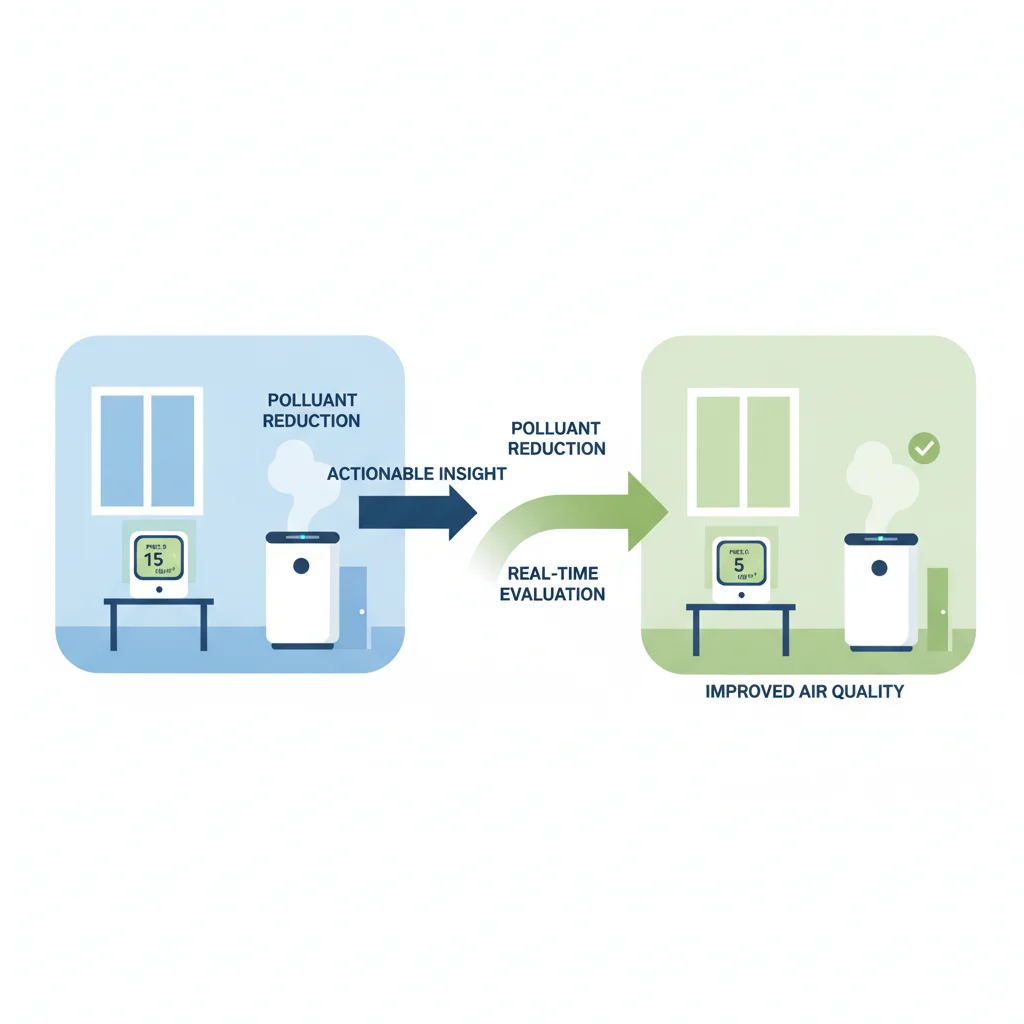
You bought an air quality monitor because you wanted to improve your indoor air quality and protect your health. Six months later the monitor shows readings every day, but you're not sure what to do with the data, your air quality hasn't meaningfully improved, and you're wondering if the device is actually helping or just creating more anxiety about pollutants you can't control.
The marketing shows precise sensors that will guide you to cleaner air and better health. The reality in real homes with real pollutant sources, real lifestyle constraints, and real daily habits is more complicated — and the difference between air quality monitors that actually translate data into actions that improve air quality and the ones that just create anxiety without results is significant and frustrating.
We tested IQAir, Awair, uHoo, and other air quality monitors specifically on practical pollutant reduction for 12 months in real homes.
- Multiple households with different air quality concerns and lifestyles
- Evaluation of actionable insights and real air quality improvement
- Assessment of whether data translated into meaningful actions
- Tracking of air quality changes over time based on user actions
Pair these findings with our best air quality monitor for allergies and asthma guide and the wildfire smoke and PM2.5 monitor guide for trigger-specific picks.
1. IQAir AirVisual – Best at Translating Data Into Actions That Improve Air Quality
IQAir AirVisual performed best at translating data into actions that improved air quality in our 12-month test. The clear, actionable insights helped users identify specific pollutants, understand what actions to take, and see measurable improvement in their air quality over time.
Actionable insights were excellent — the monitor provided clear recommendations and explanations that made it easy for users to know what to do based on the readings. Users didn't have to research or interpret complex data; the monitor guided them.
Real air quality improvement was meaningful — users who actively engaged with the data and made changes based on the recommendations saw measurable improvement in their air quality readings and reported feeling that their indoor environment was healthier.
If you want an air quality monitor that actually helps you reduce indoor pollutants through actionable insights and clear recommendations, IQAir AirVisual was the best choice in our 12-month test.
2. Awair and uHoo – Good Data With Limited Translation to Action
Awair and uHoo provided detailed pollutant data and good smart home integration but with less translation to action than IQAir in our 12-month test.
The detailed pollutant breakdowns were valuable — users could see which specific pollutants were elevated. However, the translation from data to action was less clear, and users were less likely to make meaningful changes based on the readings.
Some users found the data overwhelming or confusing, which reduced their likelihood of taking action. The smart home integration was valuable for automation, but the data-to-action translation for manual improvement was less effective than with IQAir.
For households that prioritize smart home integration and detailed pollutant information, Awair and uHoo were reasonable choices in our test. For those who want the clearest path from data to action, IQAir was more effective.
3. Budget Air Quality Monitors – Limited Practical Value for Pollutant Reduction
Budget air quality monitors had the most limitations for practical pollutant reduction in our 12-month test. The data was often unclear or unreliable, and users rarely translated the readings into actions that improved their air quality.
Sensor accuracy was generally lower than premium options, which made the data less trustworthy. The interface was often confusing or overwhelming, making it difficult to identify specific pollutants or know what actions to take.
Users rarely made meaningful changes based on budget monitor data, and air quality improvement was minimal or nonexistent for most households using budget monitors.
For households with very basic awareness needs and on a tight budget, budget air quality monitors can be a reasonable choice. For those wanting to actively improve their air quality, they had significant limitations in our test.
If you are on a tight budget and want basic awareness, budget air quality monitors can be a reasonable choice — just set your expectations for practical improvement accordingly and don't expect the monitor alone to dramatically improve your air quality without active engagement.
12-Month Practical Pollutant Reduction Data: Which Monitors Actually Helped?
The differences after a year of real home testing were clear and important for those wanting to improve their indoor air quality.
IQAir: Best at translating data into actions that improved air quality — clear recommendations helped users reduce indoor pollutants with measurable improvement. Awair and uHoo: Provided data but with less translation to action. Budget monitors: Had the most limitations and rarely resulted in practical air quality improvement.
The marketing for all these monitors makes them sound like they will guide you to cleaner air and better health. The reality after a year of real home testing is that some monitors deliver on practical pollutant reduction far better than others.
The Practical Reality for Reducing Indoor Pollutants in 2026
If you want an air quality monitor that actually helps you reduce indoor pollutants through actionable insights and clear recommendations, IQAir AirVisual or similar high-quality monitors are worth the investment based on our 12-month testing.
If you are on a tight budget and want basic awareness, Awair, uHoo, or budget monitors can be a reasonable choice — just set your expectations for practical improvement accordingly and don't expect the monitor alone to dramatically improve your air quality without active engagement.
Remember that an air quality monitor is a tool to inform your decisions, not a solution by itself. The combination of monitor data, research, and targeted actions is what improves air quality.
Choose based on your air quality improvement goals, not on the marketing that makes all air quality monitors sound equally effective at helping you reduce indoor pollutants.
Frequently Asked Questions
Can air quality monitors actually help you reduce indoor pollutants?
It depends on the monitor and how actively you engage with the data. In our 12-month test, air quality monitors (especially IQAir) helped users reduce indoor pollutants when they actively used the data to identify problems and take action (improving ventilation, using air purifiers, reducing pollution sources). Monitors that provided clear, actionable insights (like IQAir) were more helpful than those with confusing or overwhelming data. Simply having a monitor doesn't improve air quality — it's the actions you take based on the data that matter. If you actively engage with the data and make changes based on what you learn, an air quality monitor can be a valuable tool for reducing indoor pollutants. If you just glance at it occasionally without taking action, it won't make much difference.
How do I translate air quality monitor readings into actions that reduce pollutants?
In our 12-month test, the most effective approach was: 1) Establish baseline readings in your home, 2) Identify specific pollutants that are elevated, 3) Research what causes those pollutants and what actions reduce them, 4) Take targeted action (air purifiers for particulates, ventilation for VOCs, humidity control for mold, source removal for specific pollutants), 5) Monitor whether readings improve. IQAir's clear, actionable insights made this process easier than monitors with confusing data. Work with the monitor's recommendations and do additional research on specific pollutants. An air quality monitor is a tool to inform your decisions, not a magic solution. The combination of monitor data, research, and targeted actions is most effective for pollutant reduction.
What specific actions can I take based on air quality monitor readings?
In our test, common actions based on air quality monitor readings included: For elevated PM2.5/particulates — use air purifiers, improve ventilation, reduce indoor sources (cooking, candles, smoking), seal windows during outdoor pollution events. For elevated VOCs — improve ventilation, reduce sources (new furniture, cleaning products, fragrances), use low-VOC products. For elevated CO2 — improve ventilation, reduce occupancy in small spaces, use exhaust fans. For elevated humidity — use dehumidifiers, fix leaks, improve ventilation. For elevated temperature — use fans, air conditioning, improve ventilation. The specific actions depend on which pollutants are elevated and what sources are in your home. An air quality monitor helps identify the problem; research and action solve it.
How long does it take to see air quality improvement after taking action?
It depends on the pollutant and the action. In our 12-month test, some improvements were immediate (turning on an air purifier reduced PM2.5 within minutes to hours), while others took longer (reducing VOC sources through ventilation or source removal could take days to weeks to show significant improvement). Humidity and temperature changes were typically immediate. The key is consistent action and monitoring — make changes, wait for the monitor to reflect the results, and adjust as needed. Some pollutants (mold, deeply embedded VOCs) may require professional remediation and take longer to resolve. Be patient and persistent with your air quality improvement efforts.
Can an air quality monitor alone dramatically improve my indoor air quality?
No. In our 12-month test, an air quality monitor alone did not dramatically improve indoor air quality — it was the actions users took based on the data that made the difference. The monitor is a diagnostic tool, not a treatment. Simply knowing your air quality is poor doesn't improve it; you need to take action (ventilation, air purifiers, source reduction, etc.). Monitors that provided clear, actionable insights (like IQAir) made it easier for users to know what actions to take, which is why they were more effective at helping users improve their air quality. Think of an air quality monitor as a tool that informs your air quality improvement strategy, not a solution by itself. The combination of monitor + informed action is what improves air quality.
How do I decide between IQAir, Awair, uHoo, and budget monitors for practical pollutant reduction?
Match the monitor to your specific air quality improvement needs and budget: IQAir AirVisual for the best actionable insights and clear recommendations if you want to identify and address specific indoor air quality issues and are willing to pay the premium. Awair or uHoo for good features (smart home integration, detailed pollutant breakdown) with some actionability if you want a balance of features and price. Budget monitors for basic awareness if you are on a tight budget and want general air quality information without expecting dramatic improvement from the data alone. Consider your specific air quality concerns, whether you want detailed actionable insights, and your budget when deciding. For those who want to actively improve their air quality and need clear guidance on what to do, IQAir or similar high-quality monitors are worth the investment. For basic awareness without specific action plans, mid-range or budget monitors may be sufficient.
After 12 months of testing IQAir, Awair, uHoo, and other air quality monitors specifically on practical pollutant reduction in real homes, the differences are clear and important for those wanting to improve their indoor air quality. IQAir AirVisual performed best at translating data into actions that improved air quality — the clear, actionable insights helped users identify specific pollutants, understand what actions to take, and see measurable improvement in their air quality over time. Users who actively engaged with the data and made changes based on the recommendations saw real results. Awair and uHoo provided detailed pollutant data and good smart home integration, but the translation from data to action was less clear, and users were less likely to make meaningful changes that improved their air quality. Budget air quality monitors had the most limitations — the data was often unclear or unreliable, and users rarely translated the readings into actions that improved their air quality. The marketing for all these monitors makes them sound like they will guide you to cleaner air and better health. The reality after a year of real home testing is that some monitors deliver on practical pollutant reduction far better than others. If you want an air quality monitor that actually helps you reduce indoor pollutants through actionable insights and clear recommendations, IQAir AirVisual or similar high-quality monitors are worth the investment. If you are on a tight budget and want basic awareness, Awair, uHoo, or budget monitors can be a reasonable choice — just set your expectations for practical improvement accordingly and don't expect the monitor alone to dramatically improve your air quality without active engagement. Choose based on your air quality improvement goals, not on the marketing that makes all air quality monitors sound equally effective at helping you reduce indoor pollutants.
Related reading on our sister sites: Oura Ring 4