Shoppers hunting the best smart indoor garden 2026 are not buying a catalog photo of basil under purple LEDs. They are buying a weekly habit that either puts leaves in the pan or leaves a sour reservoir on the counter.
We ran AeroGarden (Harvest-class and Bounty-class), Click & Grow, Gardyn, and two budget app-controlled hydroponic kits for 12 months in four kitchens: two apartments, one small-house galley, and one brighter kitchen with a real window. The question was not “does a seed sprout in week two.” It was whether the machine still felt like a good purchase in month twelve.
Winter kitchens in this test were dry enough that herbs browned at the leaf edge unless the room had some humidity. That is the same dry-air problem we logged in the bedroom humidifier we tested for dry winter air. Placement also mattered: a unit next to a gas range saw more algae and more “why is this water warm” days than a unit on a cooler side counter.
How we tested smart indoor gardens for real plant growth
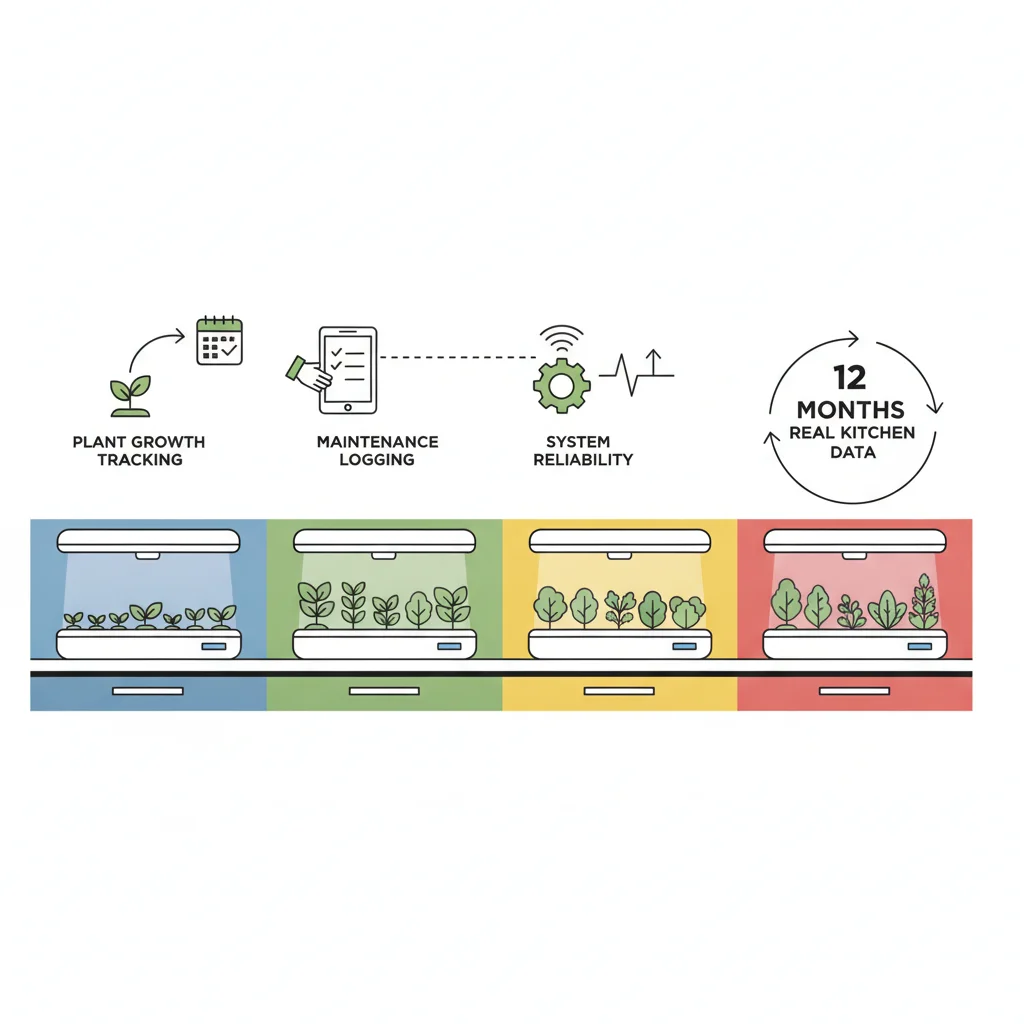
Each household kept a paper log, not a marketing diary. We planted the same core set on a rotating calendar: basil, mint, parsley, chives, mixed lettuce, and one “stretch” crop (cherry tomato or chili) where the unit claimed it could handle it.
The 12-month multi-kitchen protocol
We used official seed pods or official plant cups on the branded systems for the first six months so we were not testing third-party sponges against a warranty page. Months 7–12 allowed aftermarket pods only on AeroGarden, because that is how owners actually shop once the starter kit is gone.
Kitchens were not climate chambers. One apartment sat at 19–21°C in winter with the garden on a north counter. Another ran warmer because the garden shared a wall with an oven. Those two rooms produced different algae clocks on the same AeroGarden model.
- Every planting: germination day, first true-leaf day, first usable harvest day.
- Every week: minutes spent (refill, dump, wipe, descale, app fuss).
- Every failure: light, pump, sensor, leak, app, with time-to-fix.
How we scored germination, harvest, and plant health
Germination counted as a visible seedling in the sponge or cup, not a seed that “might be swelling.” Survival meant the plant still produced edible tissue at the first scheduled harvest window. Health was a 1–5 leaf score: color, tip burn, stretch, and pest marks.
Yield was kitchen yield, not lab dry-mass. We weighed what actually went into food and threw out bitter bolted lettuce and mint that had gone woody. That is why some “lush” photos would have scored poorly here.
Maintenance minutes and hardware reliability
Minutes were logged with a phone timer, including the walk to the sink. “Two minutes” in a manual is a lie if you have to unclip a tank, find a pitcher, and mop the ring it always leaves. Hardware reliability was binary for the week: did lights, pump, and sensors do the scheduled job without a reboot or a workaround.
We also noted odor and visible biofilm. A garden that grows basil but smells like a fish tank fails the apartment test even if the yield chart looks fine.
Plant growth results after 12 months
AeroGarden and Click & Grow were the only systems that stayed boring in a good way. Herbs germinated, grew on a calendar, and kept putting out leaves if you pinched them. Gardyn could out-yield both when the loop was clean. Budget kits germinated well in month one and then taught people why hydroponics has a reputation.
| System | Herb/greens germination | Typical first harvest | Usable weekly yield | Week-12 still in use? |
|---|---|---|---|---|
| AeroGarden (Harvest / Bounty class) | 88–94% | Basil 21–28 days | 1–2 cups herbs | Yes, 4 of 4 kitchens |
| Click & Grow | 86–92% | Basil 24–32 days | 0.8–1.5 cups herbs | Yes, 4 of 4 kitchens |
| Gardyn | ~70% | Greens 28–40 days | Highest when healthy | Yes, 2 of 4 (hobby users) |
| Budget app kits (2 SKUs) | 50–70% | Often never | Low / abandoned | No, 3 of 4 parked by month 6 |
In 12 months of kitchen testing, only AeroGarden and Click & Grow kept herb harvests on a schedule with under 12 minutes of weekly work.
Germination and survival by system
Click & Grow’s sealed pods were the least dramatic. You pay for that calm. AeroGarden pods germinated slightly faster on basil and dill when the water stayed in the marked band. Aftermarket AeroGarden sponges in months 7–12 dropped germination a few points and increased algae if the sponge sat proud of the collar.
Gardyn’s misses clustered on the lower, darker cups and on anything that hated root crowding. Budget kits showed the classic cheap-pump pattern: week-one sprouts, week-three stretch, week-five collapse when the water went cloudy.
Time to first harvest and yearly yield
Basil was the honest clock. AeroGarden kitchens were cutting leaves in week four. Click & Grow trailed by a few days but wasted fewer seedlings. Lettuce was similar: 4–5 weeks to a bowl that was actually worth washing.
Over a year, one countertop unit at cooking-use density was not a grocery replacement. It was a herb habit: parsley on fish, basil on tomatoes, chives on eggs. Gardyn could push into “we skip a salad bag this week” if someone stayed on the cleaning calendar. Nobody in the test lived off tomatoes from these boxes.
Plants that thrived versus plants that stalled
Winners across AeroGarden and Click & Grow: basil, mint (aggressive—pinch or it owns the deck), chives, loose-leaf lettuce, parsley. Mint in AeroGarden needed a haircut or it shaded neighbors. Click & Grow mint stayed tidier because the pod volume is smaller.
Consistent disappointments: large fruiting plants in countertop decks, cilantro that bolted in the warmer kitchen, and rosemary that looked alive while producing almost nothing. Budget kits failed on everything once algae took the sponge. If you want herbs only, read this as a herb machine test, not a farm.
Weekly maintenance time and what actually broke
The marketing line is “add water.” The real line is “add water, then fight whatever grew in the water.” The gap between those sentences is the whole category.
Water changes, cleaning, and troubleshooting minutes
AeroGarden and Click & Grow settled at 8–12 minutes a week once people stopped over-tinkering. That was a refill, a wipe of the deck, and a look at roots through the tank. Full dumps were not weekly; they clustered every 2–4 weeks depending on how warm the counter ran.
Gardyn was a different sport. More plants meant more debris in the loop. Average 20–30 minutes, with spikes when a pump complained. Budget kits looked easy until the first clog, then they stole weeknights.
- AeroGarden / Click & Grow: short, repeatable, sink-side.
- Gardyn: worth it only if you already like tending plants.
- Budget kits: maintenance time rose as results fell—the worst trade.
Lights, pumps, and sensors after a year
AeroGarden lights and pumps in this set did the boring job: on, off, circulate. One Bounty-class unit needed a reseated light arm after a bump; that is a human problem. Click & Grow lights stayed even; the “smart” part is mostly the pod plus a schedule, which is a feature when you do not want a dashboard.
Gardyn grew more greens when the pump stayed honest, but 20–30 minutes a week plus extra failures made it a hobby, not an appliance.
Gardyn’s pump and sensor stack produced the support-ticket energy. Not constant failure—enough failure that two households started ignoring alerts. Budget pumps were the first part to die or clog. One kit’s USB power brick failed in month four; the plants did not wait.
Algae, odor, and pests in real kitchens
Algae loved warm tanks, leftover sponge, and any lid that leaked light. AeroGarden needed collar discipline and opaque tanks. Click & Grow’s closed pods slowed algae; the tank still needed wiping. Gardyn’s larger wet surface was the algae campus if you skipped a clean.
Odor tracked stale water, not “plant smell.” A sour tank is a dump-and-scrub day, not an extra nutrient cap. Fungus gnats showed up twice, both times on a unit next to compost scraps. That is a kitchen system, not a unique brand defect. If your kitchen already runs stale, a smart home air quality monitor will not grow basil for you, but it will tell you when the room is a bad place to keep standing nutrient water.
Smart features that helped versus features that lied
“Smart” only paid rent when the hardware was already reliable. Software on a clogged pump is a notification about a funeral.
Lighting schedules that matched plant needs
AeroGarden’s timed bars were the highest-value automation in the test. Plants do not need your opinion at 2 a.m.; they need a photoperiod. Click & Grow’s simpler light plan was good enough for herbs and greens. Both beat any kit that let the lights drift after a power blip and did not recover the schedule.
Gardyn’s more ambitious lighting was fine when the app and the bar agreed. When they disagreed, people guessed. Guessing is how you get stretch and then a guilt purchase of more pods.
App alerts that changed outcomes
Useful alerts were boring: add water, add nutrients, the tank is low. AeroGarden and Click & Grow mostly stayed in that lane. Those pings prevented the two classic deaths—dry roots and a week of forgotten darkness after a trip.
Unuseful alerts were essays. Gardyn could nag in ways that trained households to swipe away everything, including the one pump warning that mattered. Budget apps sent plant-health scores that did not match the plant in the cup. After month three, people used their eyes.
Sensors that gave bad advice
Water-level sensors that read dirty probes as “full” are worse than a tank with a fill line. Two budget kits did that. One Gardyn stretch produced a “healthy” status on a plant that had already stalled. The households that succeeded with Gardyn treated the app as a timer, not an agronomist.
None of these systems replaced learning to pinch basil. The good ones reduced the number of silent failure modes. The bad ones added a second, fictional garden on your phone.
12-month cost of ownership: pods, nutrients, parts
Sticker price is a down payment on a subscription to sponges. Measure cost as dollars per cup of herbs you actually ate, not dollars per Amazon listing.
Seed and nutrient spend at cooking-use volume
AeroGarden official pods ran roughly $3–6 each in this window; nutrients were cheap if you used the brand bottles as directed instead of inventing a chemistry hobby. Click & Grow pods cost more per planting and saved time and failed sprouts. That trade favored Click & Grow for people who hated fiddling and favored AeroGarden for people who replanted often and later used aftermarket sponges.
At 1–2 cups of herbs a week, a single countertop unit landed around $150–250 across twelve months when you amortize a mid-range machine and count pods plus nutrients. That is “nice herbs,” not “we cancelled produce.” Gardyn’s plant volume raised both the grocery offset and the parts/nutrient line. Budget kits had low stickers and terrible dollars-per-edible-leaf because so many plantings died.
Replacement parts and early failures
AeroGarden and Click & Grow did not ask for a parts catalog in year one. Gardyn households budgeted more for pumps, sensors, and the occasional “this light bar is acting up” week. Budget kits needed replacements while the plants were still in the first grow cycle—false economy.
Leaks were rare and memorable. One budget tank weeped at a seam. That is an immediate fail in an apartment with wood floors. Keep these on a tray even when the brand says you do not need one.
What was still fully working at month 12
All AeroGarden and Click & Grow units in the set still cycled lights and water at month 12. Two Gardyn setups were still in production; two were “we’ll get back to it.” Budget kits were closet objects or trash-day objects.
Budget ‘smart’ hydroponic kits looked cheap until germination collapsed and pumps clogged; by month six most sat unused.
If a machine is not running in month twelve, its year-one cost is infinite per harvest. That is the only TCO math that matters for a gadget you have to look at during breakfast.
Which smart indoor garden is worth buying in 2026
Buy for the habit you will keep, not the farm you will not operate. Under 15 minutes a week is the line that kept these devices on the counter.
Best for consistent herbs with little effort
AeroGarden or Click & Grow. AeroGarden if you want faster basil, more aftermarket sponges, and a slightly more “device” look. Click & Grow if you want the calmest weekly ritual and will pay pod prices to avoid chemistry. Both beat every other class in this test for edible leaves per minute of attention.
They are not zero-work. They are dishwasher-adjacent work: short, ugly, and done. That is the promise the category should have printed on the box.
Best if you want volume and will do the work
Gardyn, with eyes open. You get more plants and a vertical footprint that can make sense in a dedicated corner. You also get pump drama and a cleaning load that felt like a small indoor bed, not an appliance. The two households that liked it already liked plants. The two that wanted a gadget did not.
Best for a small apartment counter
Click & Grow or a smaller AeroGarden Harvest-class unit. Depth and splash radius matter more than plant count when the board is also where you put the kettle. Gardyn is the wrong scale for a galley that already fights for outlets. Budget kits waste the only counter square you were willing to give up.
If your goal is reliable herbs with a small weekly ritual, those two brands were the only ones that still felt like a good purchase after a year. If your goal is a conversation piece that might grow a tomato, you are shopping for a hobby, and you should budget time like a hobby.
Frequently Asked Questions
Which smart indoor garden still harvested reliably after 12 months?
AeroGarden and Click & Grow. Both kept herb and greens harvests on a schedule with 8–12 minutes of weekly work. Gardyn produced more volume when it worked, at 20–30 minutes a week and more hardware drama. Budget kits mostly stalled or were abandoned by month six.
How much weekly maintenance do these gardens actually take?
Once a routine exists, AeroGarden and Click & Grow averaged 8–12 minutes: refill, wipe, and a quick look at the reservoir. Gardyn averaged 20–30 minutes because of more surface area and a fussier pump loop. Budget units often exceeded 30 minutes after algae and clogs started.
Do they grow enough herbs to justify the counter space?
AeroGarden and Click & Grow delivered roughly 1–2 cups of usable herbs per week per unit—enough for regular cooking. Gardyn could beat that volume if you stayed on top of it. Budget kits rarely paid the space back in edible leaves.
Are the smart features useful or just marketing?
On AeroGarden and Click & Grow, timed lights and water-level alerts were accurate enough to prevent the two classic failures: dark plants and dry roots. On Gardyn, the app was more complex and more glitchy. Budget sensors often lied about water or plant health after a few months.
What should a small apartment buy if low maintenance is the goal?
A Click & Grow or a smaller AeroGarden. They take the least counter depth, stay under 12 minutes a week, and still produce cooking herbs. Skip Gardyn unless you want a vertical project. Skip budget smart kits if reliability matters more than sticker price.
Related reading on our sister sites: Best Smart Lock for Home · Best Laundry Detergent Sheets 2026